REVIEW · TROMSO
TROMSØ: Explore The City And a Guided Tour Of PolarMuseum!
Book on GetYourGuide →Operated by MilesAway.no · Bookable on GetYourGuide
Tromsø has a talent for telling stories. This short guided walk ties Sami culture, fishing life, and polar exploration to the city streets, and the included Polar Museum tour makes Roald Amundsen’s era feel real. One thing to keep in mind: it’s only about 2 hours, so if you want long museum time, you’ll need to plan extra time on your own.
I especially like the way the route starts with the big theme (Amundsen) and then builds outward city-block by city-block. I also like that the museum visit is guided, not just a self-guided ticket—perfect when you’d rather understand what you’re looking at than guess.
Because it’s mostly on foot, you’ll want comfortable shoes and weather-ready clothing. Tromsø can change its mood fast, and you’ll feel it in your legs.
In This Review
- Key things to know before you go
- Start at Roald Amundsen’s statue: the theme lands fast
- Walking the main streets toward Tromsø Cathedral
- Aune Gården, mosaics, and the city’s architectural personality
- Town Hall to Tromsø Library: modern design in the Arctic
- Our Lady of Tromsø: the northernmost Catholic church
- Port area and Skansen: connecting everyday life to polar adventures
- Polarmuseum with a guide: Amundsen’s story with human details
- How long is enough? Timing, weather, and walking comfort
- Price and value: what $56 buys you in Tromsø
- Who should book this Tromsø walking tour and PolarMuseum visit?
- Should you book this one?
Key things to know before you go
- Small group, up to 10 people, so you’re not just an extra body in the crowd.
- Skip the ticket line, which matters when you’re squeezing sightseeing into winter daylight.
- Meet at Roald Amundsen’s statue by Roald Amundsens plass, so the whole tour has a clear polar focus.
- You’ll hit famous spots like Tromsø Cathedral and Aune Gården, plus the northernmost Catholic church.
- The Polar Museum guided portion is the payoff if you care about the human stories behind the expeditions.
- Guides such as Knut and Lucia are praised for strong storytelling and making it easy to ask questions.
Start at Roald Amundsen’s statue: the theme lands fast
The meeting point is by the Roald Amundsen statue in the park at Roald Amundsens plass. That’s a smart choice, because it tells you how to think about Tromsø from the first minute: not just as a pretty northern city, but as a place tied to exploration, trade, and survival.
I like starting this kind of tour with a named person who connects everything. Amundsen is more than a famous name here—he’s a thread that runs through the city’s polar identity, and you’ll see that thread before you even step into the museum.
Also, the tour’s pace is designed for getting your bearings quickly. You’re not stuck in one big lecture room. You’re walking, looking, and hearing how each stop connects to life in the Arctic.
Other guided tours in Tromso



Walking the main streets toward Tromsø Cathedral
From the park, the group heads into Tromsø’s main streets. This is where the tour does something valuable: it gives context while you’re still fresh enough to notice details.
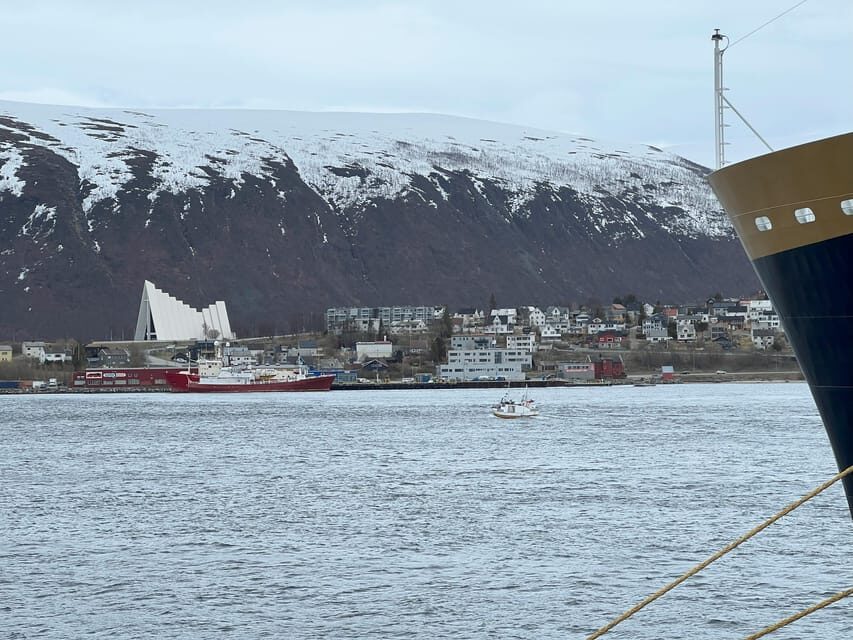
A key stop is Tromsø Cathedral. Even if you’ve seen churches elsewhere, the way a local guide frames this one helps you read it correctly—what it represents and why it shows up in the story of the city. The cathedral also gives you a natural pause point: take photos, look around, and reset before the streets get narrower and more residential.
You’ll also get small “watch for this” moments as you go. The goal isn’t to treat Tromsø like a checklist. It’s to help you notice the mix of old and new, religious and everyday, maritime and municipal.
If you’re the type who hates standing around, this section is a good warm-up. You’re moving, learning, and seeing the city’s layout while the guide is still building the story from the ground up.
Aune Gården, mosaics, and the city’s architectural personality
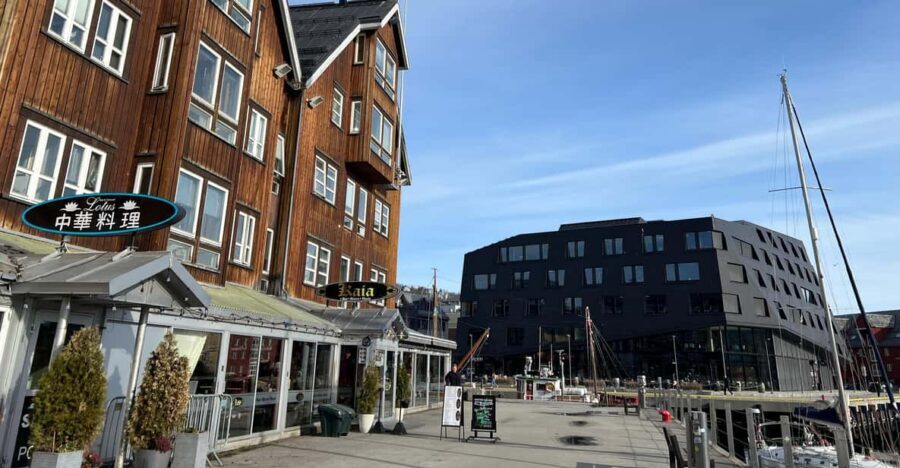
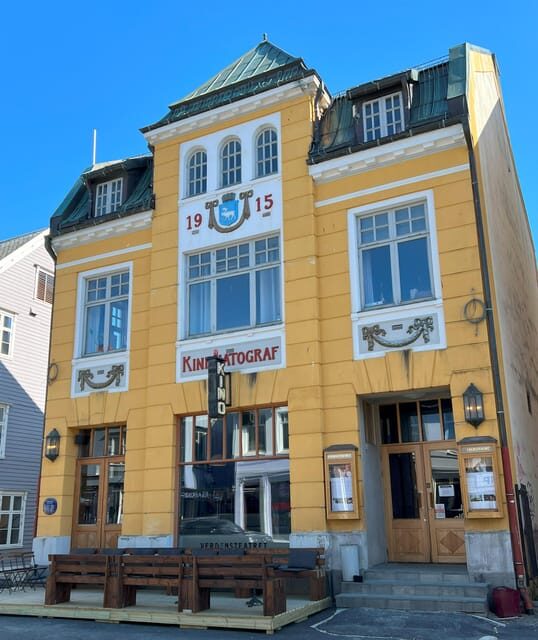
Next up is Aune Gården, described as one of Tromsø’s oldest and best-preserved buildings. This kind of stop matters because city history isn’t only in plaques—you can feel it in the building fabric, the shape, and the fact that it’s still here.
If you’re wondering why a tour would spend time on one old building, here’s the practical answer: Aune Gården helps you understand the texture of Tromsø before modern redevelopment. It’s a reality check. The Arctic isn’t just storms and ships in a textbook; it’s people living through it, long-term.
Then there are the mosaic artworks scattered around the city. Those details are easy to miss if you’re sightseeing on your own. With a guide, you’ll know what you’re looking at, and you’ll understand the value of street-level art in a place where weather can be dramatic and days can feel short.
In plain terms, this part makes Tromsø feel less like a place you pass through and more like a place that has continuity—human scale, human stories, human design.
Town Hall to Tromsø Library: modern design in the Arctic
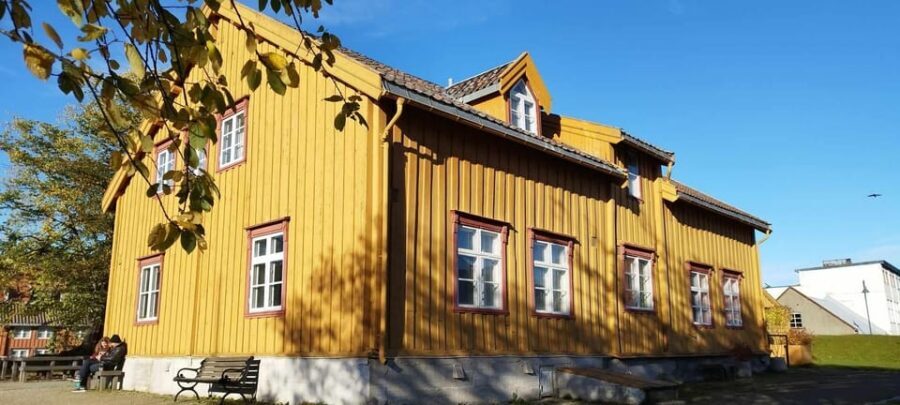
Passing the Town Hall and the Tromsø Library adds a different layer. Many visitors expect all the important culture to be old. Tromsø quietly counters that idea with architecture.
The Tromsø Library is highlighted for its bold design and its role in the Arctic’s most important bibliographic collection. That’s not just a fun fact—it’s a clue to how Tromsø thinks. In a northern city, knowledge and community spaces matter. A library isn’t an afterthought; it’s part of how people stay connected to ideas, language, and research.
I like this stop because it balances the tone of the tour. After you’ve looked at older buildings and church history, seeing a modern civic building keeps the story honest. Tromsø isn’t trapped in the past. It’s built on both memory and momentum.
Our Lady of Tromsø: the northernmost Catholic church
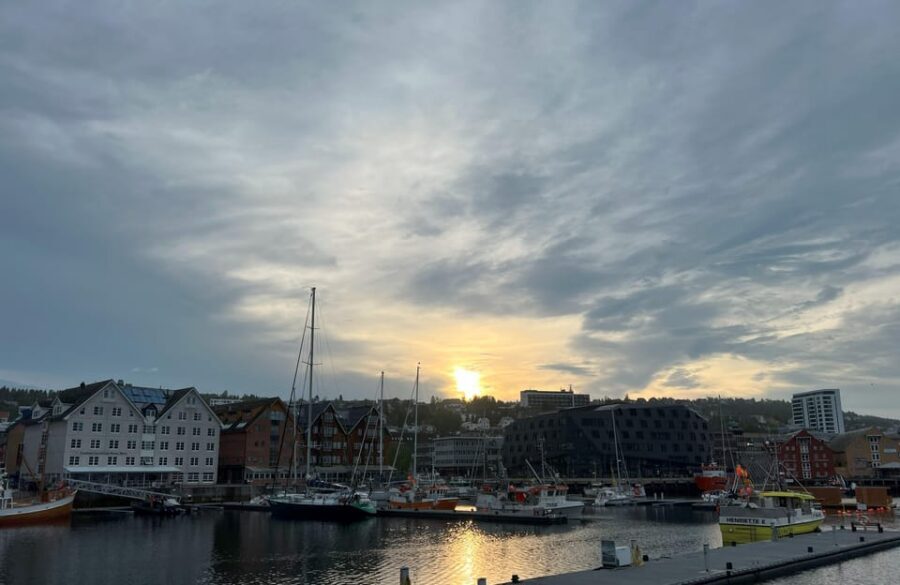
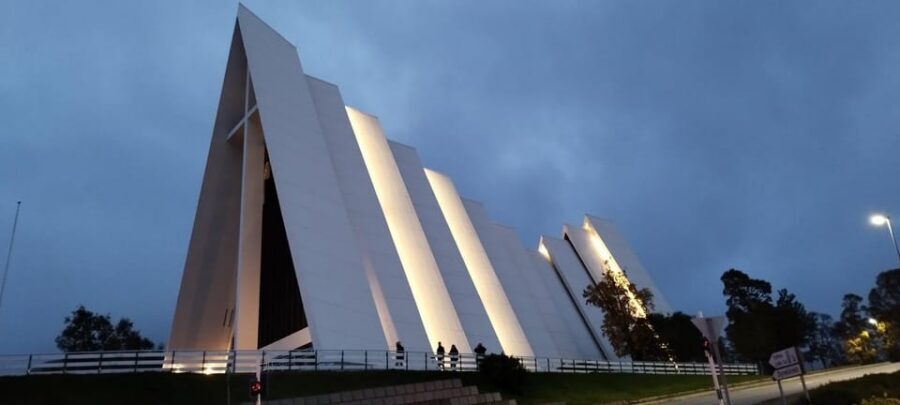
One of the tour’s standout religious landmarks is the Cathedral of Our Lady of Tromsø, noted as the northernmost Catholic church in the world. Even if you’re not religious, this stop gives you something useful: it shows how far communities have reached—how settlement, worship, and cultural identity traveled and adapted in the far north.
This is also the kind of stop where you benefit from hearing the “why.” A guide can explain what makes it significant in the wider picture of the region, rather than just pointing out the building and moving on.
There’s a practical side, too. Churches often provide a sheltered moment when the weather turns. So if you’re bundled up outside, this can be a short break—just long enough to catch your breath and warm up your hands before continuing toward the waterfront.
Other city tours we've reviewed in Tromso



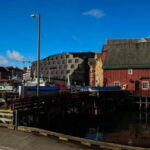
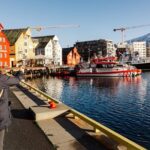
Port area and Skansen: connecting everyday life to polar adventures
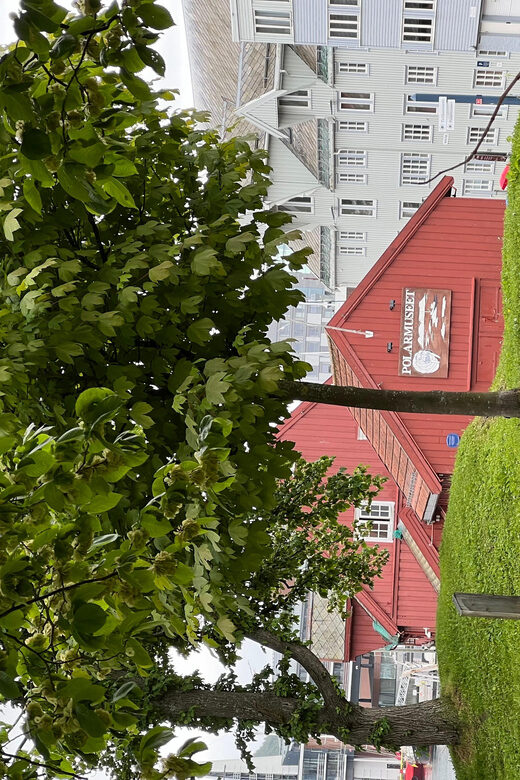
After the cathedral area, you head toward the port area and Skansen. This is where the tour’s focus on fishing traditions becomes more than a talking point.
The Arctic economy isn’t abstract. It’s tied to what people could catch, how they could store it, and how they could survive winter. When you’re walking near the waterfront, the story clicks. You can almost understand why exploration and local livelihoods shared the same roots: ships, weather, navigation, and the constant need for practical knowledge.
Skansen helps set up the final act: the Polar Museum visit. By the time you reach the museum zone, you’re not walking in cold and hoping for inspiration. You’re walking in with context—so the museum feels like an answer, not a random building you happened to enter.
Polarmuseum with a guide: Amundsen’s story with human details
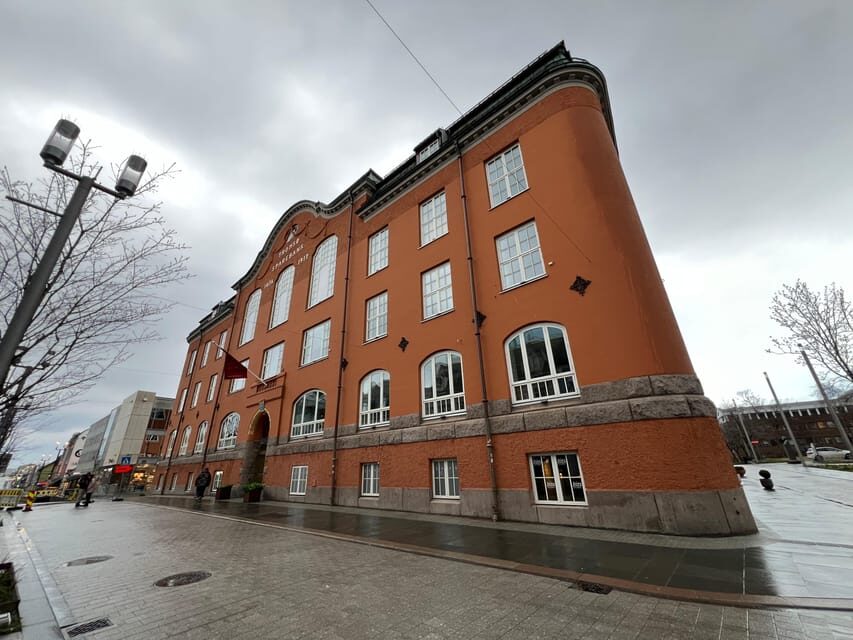
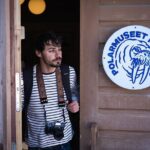
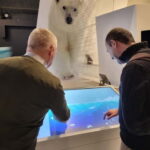
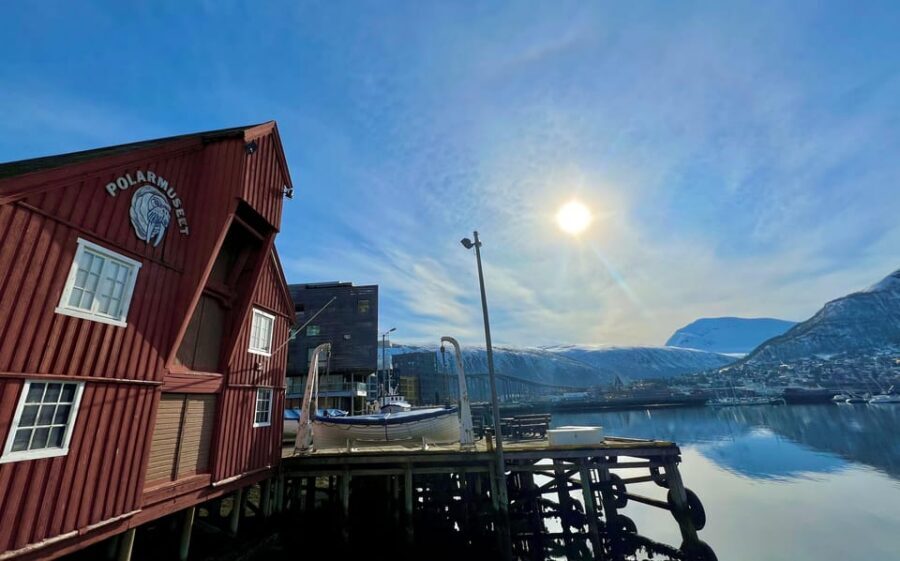
The big payoff is the Polar Museum, where you get entry plus a guided Polar Museum tour. This is more than “see artifacts.” It’s a guided story about Roald Amundsen and polar expedition history, presented in a way that ties back to what you saw on the streets.
The guide’s job here is crucial. Without guidance, a museum can become a gallery of objects that look impressive but don’t add up. With guidance, those objects become evidence—of decisions, risks, and lives shaped by the Barents Sea region.
You’ll also hear about the human side of the polar age: the audacity of the expeditions and the cultural backdrop that made them possible. This is where themes like Norwegian exploration and local survival knowledge come into focus together.
If you like museums where the guide tells a story and points out the meaning behind what you’re seeing, you’ll likely enjoy this segment a lot. The group format helps too—small enough that you can ask questions when something grabs you.
Guides such as Knut are noted for their engaging storytelling and making it easy to ask questions. Lucia has also been praised for giving a thorough history of Tromsø plus a look at contemporary city life, which helps you connect past and present instead of treating the museum like a closed chapter.
How long is enough? Timing, weather, and walking comfort
This experience runs about 2 hours from start to finish, and the tour returns to the meeting point. That timing is part of the value—and part of the limitation.
The upside: if you’re short on time in Tromsø, you still get a strong orientation. You’ll leave knowing where key sights are and how to connect them to one broader polar story. You also get museum entry and a guided museum tour, which squeezes a lot into a compact schedule.
The downside: a 2-hour visit doesn’t let you linger for long. If you’re the type who likes reading every label and spending extra time on one exhibit, you may want to add independent museum time afterward.
Weather is a real factor. Tromsø is famous for surprises, and this tour is outdoors for much of the walking. Pack for comfort first: comfortable shoes and weather-appropriate clothing. Even an energetic guide can’t freeze-proof your feet, so bring layers you can adjust.
A helpful mindset: treat the tour as your setup. Use it to understand what matters. Then, if something sticks, you’ll know exactly where to go next on your own.
Price and value: what $56 buys you in Tromsø
At $56 per person for a 2-hour small-group walk that includes:
- an English-speaking guide
- a city walking tour
- entry to Polarmuseum
- a guided tour of Polarmuseum
- and a skip-the-ticket-line benefit
…the price is easier to justify. You’re not paying only for walking and chatting. You’re paying for a guided museum experience plus time-saving entry. For many visitors, the museum part alone would justify a standalone cost, and here it’s bundled with city context.
It’s also a good deal if you care about meaning. A guided tour can reduce the guesswork cost—how long it would take you to research on your own, and how often you’d miss details like the mosaics, Aune Gården, or the significance of specific churches.
If you’re traveling as a couple or solo and want a smart first introduction to Tromsø, this format often feels like the best “first day” investment.
If you’re traveling with someone who hates walking or prefers a slow museum pace, the short duration can feel rushed. In that case, consider a different plan with more time.
Who should book this Tromsø walking tour and PolarMuseum visit?
Book this if you:
- want a guided introduction to Tromsø in a short time window
- like history told with street-level details, not just indoor facts
- plan to visit the Polar Museum anyway and prefer a guide-led version
- appreciate storytelling—especially around Amundsen, fishing traditions, and Sami history/culture
Skip it (or at least think hard) if you:
- need wheelchair access—this one isn’t suitable for wheelchair users or mobility impairments
- are traveling with young kids—it’s not suitable for children under 8
- want a long, slow museum day on rails—2 hours won’t feel like enough
One last practical note: choose your comfort level. This is a walking tour. Dress so you can keep going without fighting your clothing.
Should you book this one?
In my view, this is a strong pick for first-timers to Tromsø—especially if your time is limited and you want the Polar Museum experience to come with explanations, not just admission. The best reason to book is the combination: city orientation plus a guided museum tour inside one small group.
If you’re ready to walk, wear layers, and let a local guide connect the dots between culture, architecture, and polar exploration, you’ll likely leave with a clearer sense of Tromsø than you’d get from hopping between sights alone.